PESHAWAR: In a conference environment traditionally dominated by lectures, case discussions,
and academic presentations, the 2nd KMCCon (April 14–16, 2026) at Khyber Medical College
unfolded this year as something distinctly different—an organized, data-driven public health
exercise embedded within a student-led scientific gathering.
Over three days, the Medical Section of the Literary Society transformed two awareness stalls into
structured screening and behavioral observation units, generating measurable clinical insights into
bone health, nutrition, and lifestyle patterns among a young medical population. What emerged
was not simply engagement, but a layered observational dataset with real-world preventive
implications.
At the center of coordination stood Literary Secretary Abdullah Waheed, whose involvement
extended from securing collaboration with Haleon for BMD diagnostic support to ensuring multistall synchronization across three days. His role functioned as the operational backbone of an
initiative that required continuous coordination between clinical, academic, media, and logistics
teams.
Bone Mineral Density (BMD) Awareness Stall: Clinical Screening and Risk Mapping
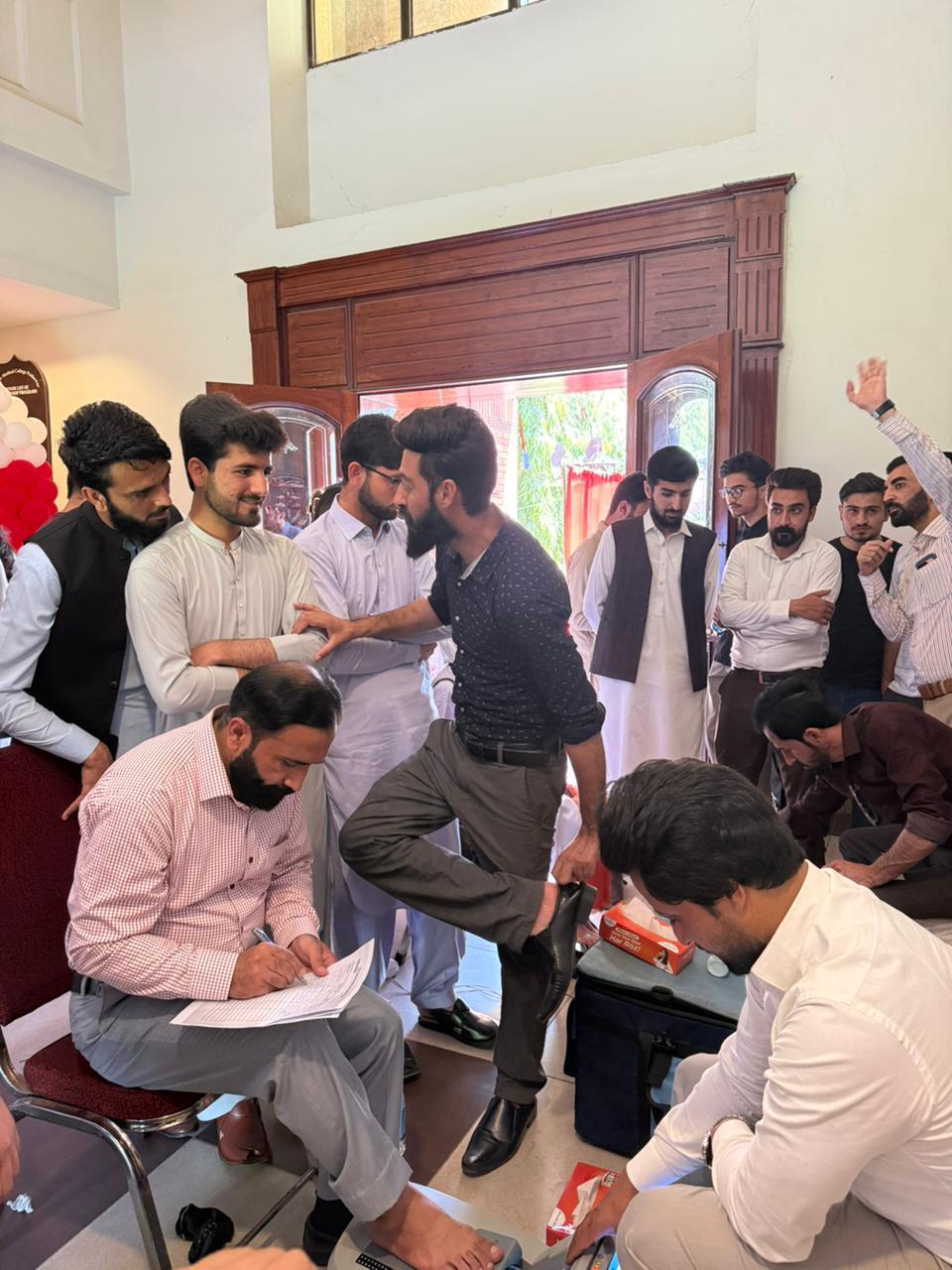
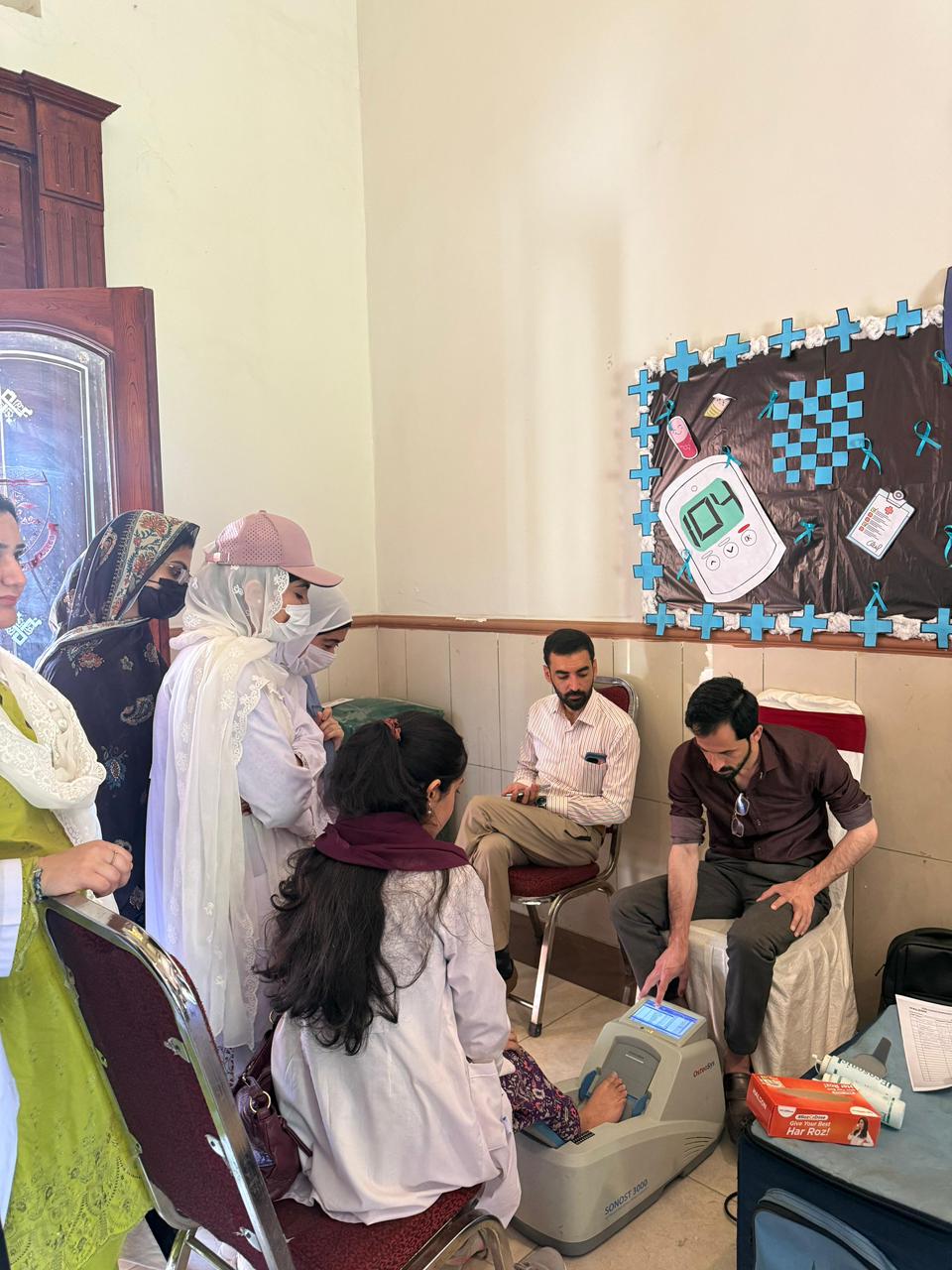
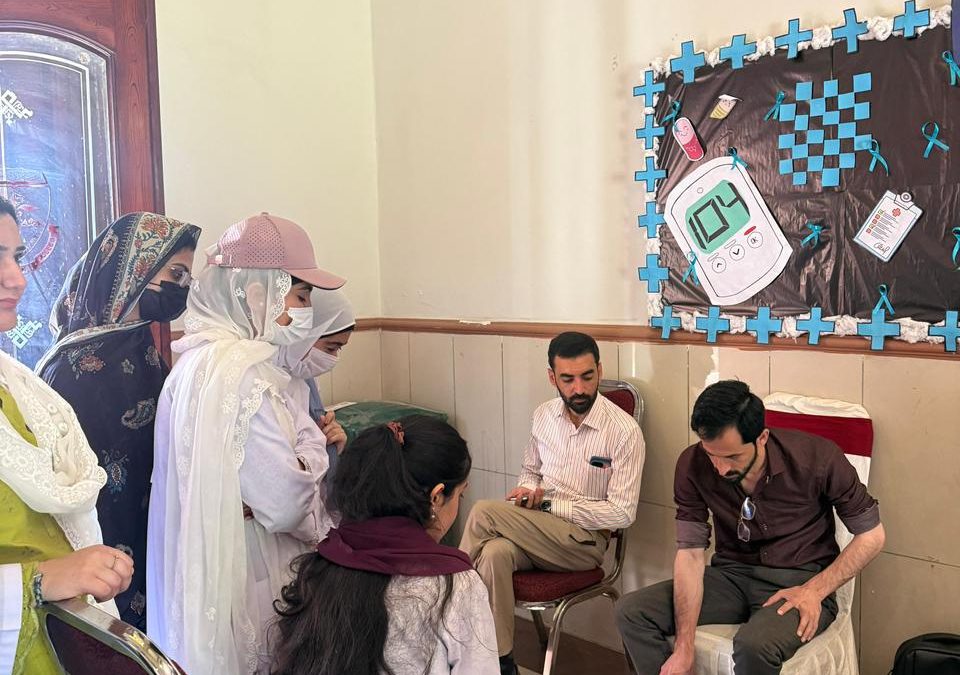
The first major component of the initiative was the Bone Mineral Density (BMD) Awareness Stall,
established in collaboration with Haleon, and positioned strategically at the entrance of the Crush
Hall. The stall functioned as a high-throughput screening station where participants underwent
rapid, non-invasive BMD testing requiring approximately 2–3 minutes per individual, maintaining
machine utilization above 90% across all three days.
This stall was conceptualized and overseen by Rukhsar Amir (Incharge) and Talha Riaz (CoIncharge), while real-time participant flow and operational efficiency were managed by
Muhammad Fawad Iqbal and Muhammad Uzair, ensuring uninterrupted processing even during
peak congestion periods where queues extended for extended durations.
Across the three days, approximately 340–360 participants were screened. The observed
distribution revealed that:
• Around 74–75% demonstrated normal bone mineral density
• Approximately 11–12% were categorized as osteopenic
• Nearly 14–15% fell into low BMD or osteoporotic range
This translated into a clinically significant observation: nearly one in four participants (25–27%)
exhibited reduced bone mineral density, an unexpected finding in a predominantly young,
medically aware population.
Further pattern analysis showed that among individuals with abnormal BMD (≈90–95 participants):
• Nearly 70% reported low calcium intake
• Around 63% had limited sunlight exposure (<15 minutes daily)
• Approximately 58% led sedentary lifestyles
• Notably, around 22–25% had normal BMI despite reduced BMD, highlighting a disconnect
between general body weight and skeletal health
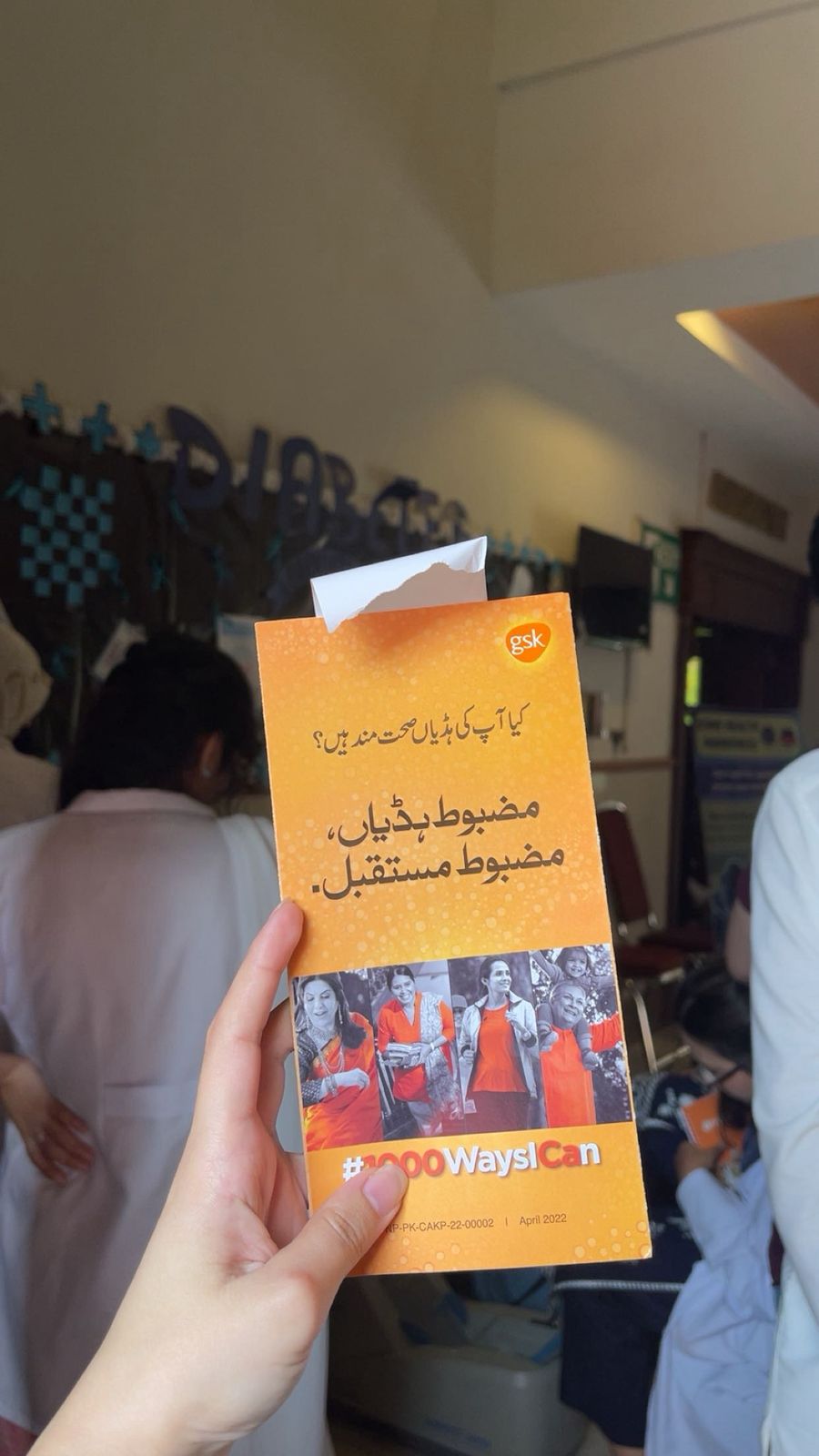
To address these findings, each at-risk participant was provided with structured, customized
pamphlets designed and distributed on-site. These included simplified bone physiology diagrams,
locally relevant calcium-rich diet charts, sunlight exposure schedules tailored to student routines,
weight-bearing exercise guidelines, and self-monitoring checklists. Nearly 100% of abnormal
cases received these materials, and approximately three-quarters engaged in on-site
discussion while reviewing them, indicating strong immediate uptake.
Alongside this, a “Myth vs Fact” activity, conducted by Noore, Khadija Azmat, Areeba, and
Hooria, engaged approximately 170–180 participants, where baseline incorrect responses stood
at nearly 65–67%, later improving to 88–90% accuracy, reflecting a 22–25% immediate knowledge
gain following interactive correction.
Humaam Shah (Head of Organizing) and Khadija Azmat (Head of Team Activities) provided
overarching supervision ensuring synchronization between screening, engagement, and counseling
components, while setup and stall infrastructure was executed by Romaisa Wali, Manal Inam,
Muhammad Fayyaz, Abdul Mueed, Zia ul Abrar, Muhammad Fawad Iqbal, and Muhammad
Uzair, who ensured full operational readiness within under an hour each day.
On Day 2 and Day 3, operational continuity was maintained seamlessly by Muhammad Fawad
Iqbal, Muhammad Uzair, and Abdullah Waheed, ensuring uninterrupted functionality even during
leadership gaps.
Nutrition Awareness Stall: Dietary Profiling, Behavioral Correction, and Clinical Counseling
Parallel to the BMD screening unit, the Nutrition Awareness Stall functioned as a second
observational and educational hub, engaging approximately 480–510 participants across three
days. This stall was coordinated with active clinical input from Ms. Sadaf Khan and Ms. Habiba
Shehzadi (MPhil Scholars, KMU; Agriculture University graduates), whose presence added
structured nutritional counseling to the engagement framework.
BMI assessment of approximately 440 participants, managed efficiently by Rida Akbar and Abdul
Mueed, revealed:
• Around 63–64% had normal BMI
• Nearly 20–22% were underweight
• Approximately 15–17% were overweight or obese
This indicated that nearly 36–38% of participants had abnormal BMI profiles, reinforcing the
presence of a dual burden of malnutrition.
A major component of this stall was the “Build a Balanced Plate” activity, engaging approximately
220–240 participants, where baseline dietary patterns showed:
• Around 72–75% carbohydrate-heavy meal composition
• Nearly 60–63% protein deficiency
• Approximately 75–78% inadequate fruit and vegetable intake
Following structured correction, nearly 84–86% of participants successfully redesigned
balanced meal structures, reflecting a substantial 40–45% improvement in dietary
understanding within minutes of guided intervention.
Clinical consultations were conducted by Ms. Sadaf Khan and Ms. Habiba Shehzadi, totaling
approximately 155–170 participants, each session lasting around 6–8 minutes. These sessions
addressed protein requirements (0.8–1.2 g/kg/day), micronutrient deficiencies, affordable student
dietary planning, and metabolic risk awareness. Around 70% of abnormal BMI participants
actively sought consultation, demonstrating high behavioral responsiveness.
Grip of Steel: Arm Wrestling Competition and Behavioral Correlation
The third major engagement component, the “Grip of Steel” arm wrestling competition, was
organized by Zia ul Abrar (2nd Year MBBS) with co-contribution and support from Fazluminnallah
(2nd Year MBBS). This segment attracted approximately 190–210 participants, alongside several
hundred spectators over three days.
While primarily designed for engagement, the competition revealed observable lifestyle
correlations. Around 72% of winners reported regular physical activity, while approximately 63%
demonstrated balanced dietary habits. Participants with lower nutritional status showed a 35–
40% reduction in endurance and match duration performance, with an average 25–35 second
difference in match stamina between active and sedentary individuals.
Importantly, this segment acted as a behavioral bridge, with nearly 60% of participants
proceeding to the Nutrition Stall and around 33–35% subsequently undergoing BMD screening,
indicating a clear conversion from physical engagement to health-seeking behavior.
Media Documentation: Complete Narrative Capture and Institutional Memory
The entire initiative was comprehensively documented by the Media Team led by Zainab Hafeez
and Minahil Awan, whose coordination ensured structured coverage across all three days. Onground documentation was carried out by Fatima Somair, Urva Ahmer, and Ali, who captured
both clinical interactions and crowd engagement moments.
Approximately 300+ photos and video clips were recorded, ensuring near-complete visual
coverage of all activities. Zainab Hafeez played a particularly pivotal role in editing and assembling
the final reel, converting raw footage into a cohesive narrative that represented the entire three-day
progression of the initiative.
Their collective work ensured that the scientific and social dimensions of the event were preserved
not only in data but also in visual institutional memory.
Conclusion: A Structured Micro-Model of Preventive Public Health
Across three days, the Medical Section’s initiative at KMCCon demonstrated a rare convergence of
clinical screening, behavioral analysis, structured education, and quantitative observation
within a student-led framework.
Key measurable outcomes included:
• Approximately 25–27% prevalence of reduced BMD
• Nearly 36–38% abnormal BMI distribution
• Around 70% baseline dietary imbalance
• Approximately 40–45% improvement in nutritional behavior post-intervention
• Nearly 60% behavioral conversion from engagement activities to clinical screening
pathways
Under the leadership of Abdullah Waheed, and through the coordinated efforts of Rukhsar Amir,
Talha Riaz, Muhammad Fawad Iqbal, Muhammad Uzair, Humaam Shah, Khadija Azmat,
Romaisa Wali, Manal Inam, Muhammad Fayyaz, Abdul Mueed, Zia ul Abrar, Ms. Sadaf Khan,
Ms. Habiba Shehzadi, Noore, Areeba, Hooria, Fatima Somair, Urva Ahmer, Ali, Zainab Hafeez,
and Minahil Awan, the initiative functioned as a unified model of preventive healthcare delivery.
What emerged was not a set of isolated stalls, but a continuous, structured, and measurable
health intervention system embedded within an academic conference setting, demonstrating
how student-led platforms can generate both awareness and actionable epidemiological insight
when executed with clinical rigor and coordinated design.